Finding a quiet neighborhood
Last checked
You tour the house at 2 p.m. on a Sunday, and it’s silent. You move in, and at 6 a.m. on a Tuesday the commuter traffic starts outside the bedroom window. Noise is one of the easier things to check before you buy, if you check it in the right order and at the right times.
It’s worth the trouble. The World Health Organization’s 2018 guidelines for Europe recommend keeping road noise below 53 decibels averaged over the day, and 45 at night. Long-term traffic noise is linked to poor sleep and heart disease.
First, the map: streets and sources
Start with the streets. The quiet streets layer highlights neighborhoods where at least nine roads in ten are quiet residential streets, bounded by the main roads around them.
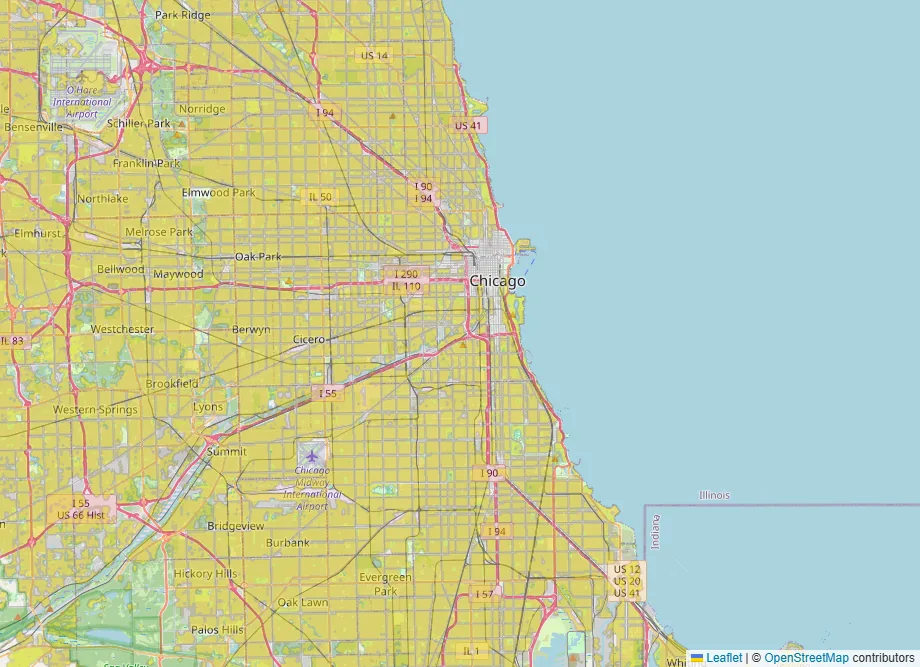
Then the sources. The noise layer estimates average sound levels from roads, airports, rail and other sources, from quiet, under 45 decibels, to very loud, above 75. Much of it comes from the federal transportation noise map, whose newest data is from 2022 and 2023.
Know what those numbers are. They’re 24-hour averages from a model. The federal agency that makes the transportation map says it shows national trends and shouldn’t be used to judge one location at one time. It ignores walls, hills and the building next door.
Next, planes and trains
Airports deserve a closer look. The Federal Aviation Administration treats a day-night average of 65 decibels as the line for significant noise near airports. In 2021 it published a survey of more than 10,000 people near 20 airports. Far more of them were highly annoyed than the old standard predicted, at every noise level.
Look at flight paths, not just distance from the runway. A home 10 miles out under the approach can hear more than one 3 miles off to the side.
Then the traffic you can’t hear on a map
The traffic congestion layer leaves out areas near roads that run near or over capacity at weekday rush hour. A road that crawls at 5 p.m. is often busy long before sunrise too.
Finally, go and listen
No map replaces standing in the yard. Go at the times that matter:
- Weekday rush hour, morning and evening.
- After dark, when sounds carry and bedroom windows matter.
- A Friday or Saturday night, for bars, games and events.
- With the windows closed inside the house, to hear how much gets through.
Bring a phone with a sound meter app if you want a number. Compare a few spots: the front door, the backyard, the main bedroom.
Your starting map
Try quiet streets, low noise and lighter traffic together, then visit the places that are left.