Where to live when you work from home
Last checked
In September 2026, about 1 in 10 American workers did all of their work from home, according to the Bureau of Labor Statistics. Another 1 in 9 did some of it. If you’re one of them, the usual first question in a home search, “how far is it from work,” mostly disappears. A different set of questions takes its place.
Can I get fast, reliable internet there?
This comes first, and it’s the one our map doesn’t answer. We don’t have a broadband layer.
The place to check is the FCC’s National Broadband Map. Type in an exact address and it lists the internet providers that say they serve it. For each one it shows the type of connection, like fiber, cable or fixed wireless, and the fastest speed they advertise.
Know its limits. “Available” means the provider says it serves that spot, not that anyone nearby gets those speeds or likes the service. It doesn’t show prices. If the map is wrong about an address, anyone can file a challenge with the FCC.
Rural areas need the most care. By the FCC’s own count, about 13% of rural Americans couldn’t get 100 megabits down and 20 up as of June 2025. That counts cable, fiber, DSL and fixed wireless, and it’s the speed the FCC treats as today’s standard. Those numbers don’t yet include corrections people had filed. Counting satellite service, the FCC says nearly everyone can get it. It also warns satellite can be slower and less steady in remote areas.
Before you buy, ask the seller which provider they use and what speed they get. Then call that provider with the address.
Will it be quiet enough to work?
When home is also the office, noise matters all day, not just at night. The noise layer estimates average sound levels from roads, airports, rail and other sources. Its scale runs from quiet, under 45 decibels, to very loud, above 75. You choose how quiet you want it.
It’s an estimate of the 24-hour average. A leaf blower next door or a school bell at 3 o’clock won’t show. Visit on a weekday afternoon.
Can I get outside during the day?
Without a commute, a walk at lunch is often the only time you leave the house. The natural spaces layer shows everywhere within about a six-minute walk of a park, forest, lake or other open land.
How easily can I get to the office, or anywhere else?
Most remote jobs still involve some travel: a quarterly meeting, a client visit, a team offsite. The airport layer shows what’s within a chosen distance of a commercial airport.
If you go in a few days a week, you’re a commuter on those days. The commute filter, part of BelongMaps Premium, draws everywhere within your chosen travel time of the office.
Will my money go further?
It can. Remote work is what lets some people move somewhere cheaper, and the cost of living layer shows where everyday prices run lower. Before you do the math, read why cost of living calculators disagree. Some employers also adjust pay by location, so ask before you move.
Working from home also means paying for the office. A spare room costs money in the purchase price and in property tax every year. The home cost and property tax layers let you price that room area by area.
What if the job changes?
Remote arrangements end. If yours did, could you find work nearby, or would you have to move again? The nearby jobs layer shows where there are enough jobs in your industry within a typical commute. It’s worth a look before you move somewhere very small.
Your starting map
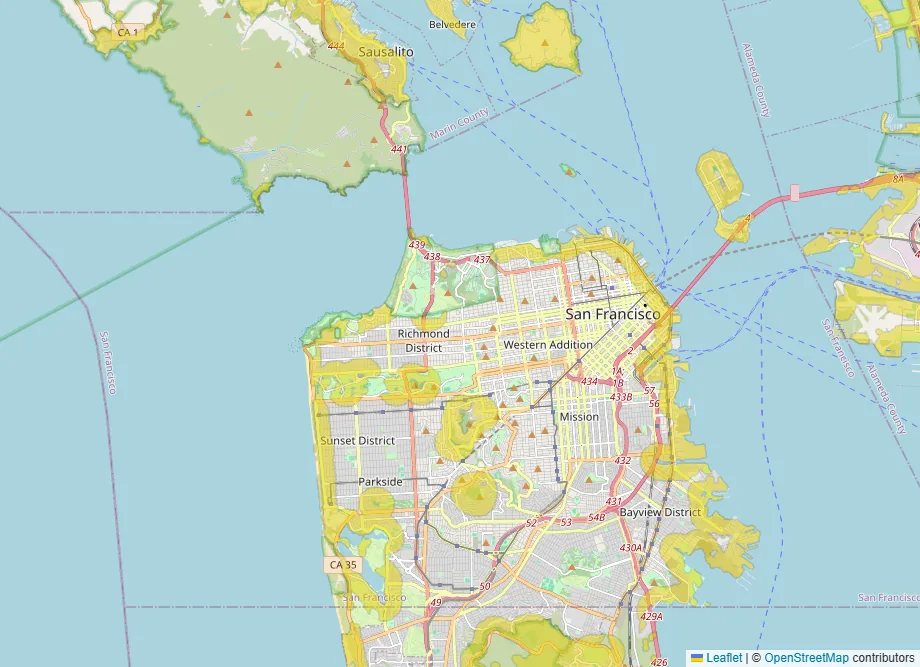
This map opens with three layers on: near nature, quieter, and within reach of an airport. Then check the internet at any address you like on the FCC’s map.