Choosing where to retire
Last checked
In 2024, only about 1 in 18 Americans aged 65 and over had moved in the past year, by the Census Bureau’s count. Most stay put. A 2024 AARP survey found three in four adults 50 and over want to stay in their current home. So if you’re planning a move in retirement, it’s probably a big one, and one you’ll want to get right the first time.
Here is one way to narrow the map, in the order that tends to matter most. The last section opens the map with the first three steps already switched on.
Step 1: Health care you can reach
Start here, because it’s the hardest thing to fix after you move.
Rural hospitals have been closing for two decades. The University of North Carolina’s Sheps Center counts 197 rural hospital closures and conversions since 2005, at last count. A town that had a hospital when you visited on vacation may not have one now.
Our hospital layer shows everywhere within a chosen distance of a well-rated hospital. Fifteen miles is the starting point. Pull it tighter if you’d rather not drive far for appointments.
Check your insurance too. Original Medicare works with any doctor or hospital that takes Medicare, anywhere in the country. Medicare Advantage and drug plans are different. You generally have to live in a plan’s service area, so the plans on offer change when you move. Compare them for the new address before you commit.
Step 2: What a fixed income buys
Once you retire, your income is mostly set, so everyday prices matter more than they did. Our cost of living layer compares the price of goods and services across regions, with housing and utilities left out. That isn’t the only index around, and the others can disagree by a lot.
Housing is the bigger question. In that same AARP survey, the people who expected to move named housing costs as the main reason. 71% pointed to rent or mortgage payments, 60% to upkeep and 55% to property taxes. If you’re buying, the home cost layer shows what homes typically sell for in each area.
Step 3: Property tax, and the relief you might get
Property tax keeps coming every year, whether or not your income does. The property tax layer shows how heavy it runs neighborhood by neighborhood.
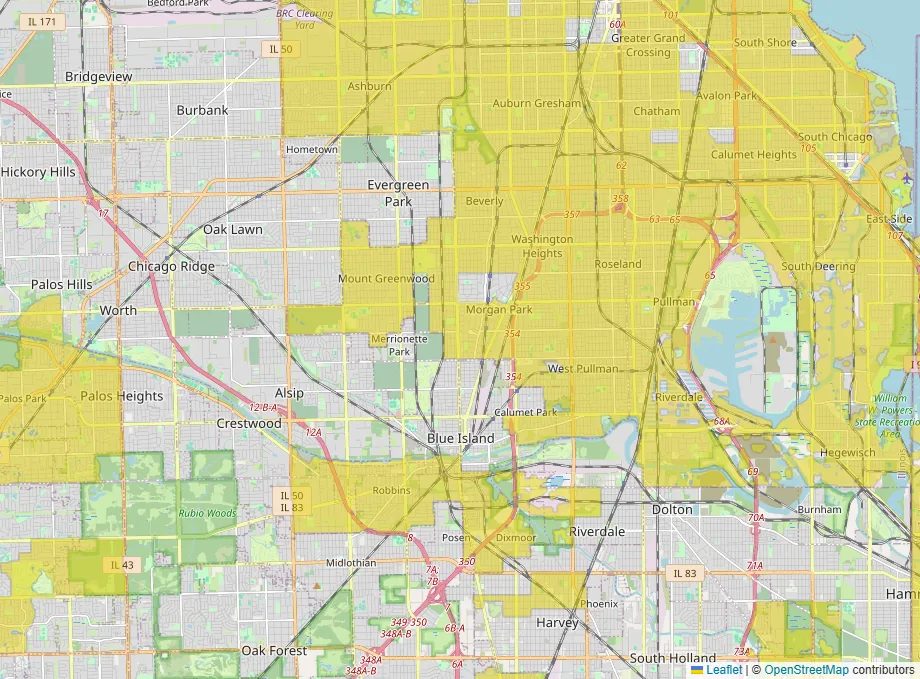
Many places offer relief for older homeowners, and the rules differ a lot. As of 2026, Illinois lets homeowners 65 and over with household income of $75,000 or less freeze their home’s assessed value. The bill can still rise if local rates do, and you reapply every year. California lets qualifying seniors postpone their property tax instead. The state places a lien on the home, and the tax must be repaid eventually.
So ask the county what you’d qualify for at the new address. Our guide to why property tax estimates disagree explains why the listing’s tax figure probably isn’t yours.
Step 4: Weather you can live with at 80
Think about the climate you’ll have in fifteen years, not just this winter. The National Institute on Aging warns that older adults are at higher risk from extreme heat. Chronic conditions and some common medicines make it harder for the body to cool down.
Snow cuts the other way. Shoveling, icy steps and winter driving get harder with age. The snowfall layer lets you set the range you’re comfortable with.
Natural hazards matter for insurance as much as safety. Our guide to finding a place with lower disaster risk walks through the layers for flood, wildfire, hurricanes and more.
Step 5: Getting around if you stop driving
Most people drive for years into retirement. Plan for the day you don’t anyway. A place where you can walk to a grocery store, or catch a bus to the doctor, stays livable far longer. Our guide to living without a car covers the transit, walkability and grocery layers.
If family lives far away, being within easy reach of an airport makes their visits, and yours, much easier. There’s a layer for that too.
Try it before you buy it
A map can’t tell you whether you’ll find your people there, or like the pace of the place. The same AARP survey found 44% of adults 50 and over expect to move anyway at some point, mostly because of housing costs. A second move late in life is hard, so test the first one.
- Rent there for a season if you can, and make it the worst season for that climate.
- Drive from the house to the nearest hospital at night.
- Look up the Medicare Advantage and drug plans offered at the new address.
- Ask the county which property tax relief you’d qualify for, and when to apply.
Your starting map
This map opens with the first three steps switched on: near a hospital, everyday costs, and property tax. Adjust each one to your own limits. If snowfall or a hazard layer matters more to you, swap it in for one of the three. Free accounts can run three at a time.