Moving with a dog
Last checked
About 71 million U.S. households have a dog. Most people start with the yard. A few other things decide how the move goes, and most of them come up in this order.
On the map: somewhere to walk
A dog needs walks every day, in every season. A park or trail within a few minutes makes that easy. The natural spaces layer shows everywhere within about a six-minute walk of a park, shoreline or other open space.
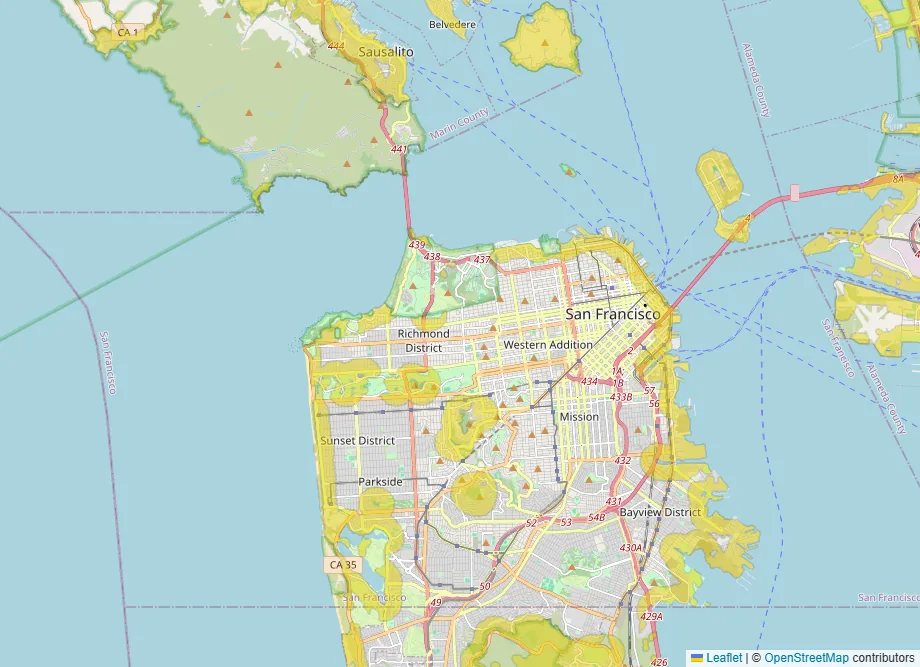
Walkable streets matter too. The walkability layer uses the EPA’s walkability index. It scores how connected the streets are, how close transit is and how mixed the uses are. It doesn’t know whether there’s a sidewalk.
Before an offer: the rules
If the home has a homeowners association or is a condo, read the pet rules. Some limit the number, size or breed of dogs. If you’re renting, ask about pet deposits and monthly pet fees, and get the pet policy in writing.
Then ask an insurance agent. Dog bites led to about 28,450 homeowners insurance claims in 2025, averaging over $65,000 each. Some insurers refuse or surcharge certain breeds. A handful of states, among them New York, Illinois, Nevada and Colorado, bar that based on breed alone, and Minnesota bars refusals. Most states allow it.
Before you move: the house and yard
- Check the fence: height, gaps, and the gate latch.
- Look for things a dog shouldn’t reach, like a pool or a busy road beside the yard.
- Note the flooring. Slippery floors and steep stairs are hard on older dogs.
Climate and the ground underfoot
Hot places mean planning walks around the heat. The ASPCA says asphalt can reach 125 degrees Fahrenheit on a 77-degree day, and veterinarians warn hot pavement can burn paw pads. Snowy places mean ice melt and short winter walks.
After the move: local requirements
Every state or county requires rabies shots, on a schedule that varies. Many places also require a dog license. Check with the county or city in your first weeks there.
When you’re ready to look, start with parks nearby and walkable streets switched on together.