How to research a neighborhood before you buy
Last checked
A home inspection checks the house. Nobody inspects the neighborhood but you. The good news is that most of it can be checked, and much of it from your couch. Here is the order that saves the most wasted weekends.
From home: the map
Start with the things that don’t change when you visit on a sunny Saturday. Flood zones, crime rates, noise and school quality all show up on a map before you’ve driven anywhere.
The flood layer leaves out FEMA’s high-risk flood zones. Remember that rain floods plenty of homes outside them, which why flood maps disagree explains.
For crime, our guide to checking crime near an address shows how to look up the exact address. Then compare the area with its neighbors on the crime layer.
For noise, the noise layer estimates average sound levels from roads, airports and rail. It’s an estimate of the whole day, so it won’t show a rush-hour roar or a weekend bar. That’s what the second visit below is for.
For schools, the school layers show quality, not boundaries. Find the assigned school for the exact address on the district’s site, and confirm it with the district, because zones change.
From home: the public records
A surprising amount about a specific house is public.
Building permits. Many cities and counties let anyone search permit history by address. Alameda, California, for example, puts permits since 1995 online. A new kitchen with no permit behind it is worth asking about, because unpermitted work can be expensive to fix later.
The seller’s disclosure. What sellers must tell you depends on the state. Texas’s disclosure form asks about past flooding, flood insurance claims, FEMA aid and repairs made without permits. Virginia’s form says the owner makes no promises about the home’s condition, and tells buyers to do their own checks. Read whatever your state’s form says, and notice what it leaves out.
Lead paint. For most homes built before 1978, federal rules require sellers to disclose any lead paint they know about and give you an EPA pamphlet. Buyers also get 10 days to have the home tested, unless they agree in writing to shorten or waive that.
Radon: test the house, not the area
Radon is an invisible gas that seeps up from the ground. The EPA recommends testing every home below the third floor. It estimates nearly 1 in 15 homes has a level high enough to fix.
The radon layer shows ZIP codes where the average home test is low. An area average can’t clear a particular house, though. Neighbors on the same street can test very differently. Put a radon test in the inspection.
A worked example: one address, half an hour
Say you’ve found a 1960s ranch house you like. Here is how the checks above play out.
- On the map: outside the flood zones, crime about average for the city, near a busy road.
- The district’s boundary tool confirms the elementary school you expected.
- The permit search shows a roof in 2015 and nothing for the remodeled kitchen. That goes on your list of questions.
- The house predates 1978, so expect the lead disclosure and pamphlet, and consider using the 10 days.
- The radon layer shows a low area average. You still add a radon test to the inspection.
Thirty minutes, and you know what to ask, what to test and when to visit.
In person: go at the wrong times
Everyone tours at 11 on a Saturday. That’s the one hour that tells you least.
- Come back on a weekday at rush hour and hear the road.
- Come back after dark. Notice the lighting, the parking and the noise.
- Drive your real commute at the time you’d really make it.
- After a heavy rain, look at the street and the yard.
- Talk to a neighbor. Ask what they’d want to know if they were buying.
Before you sign
- Order a home inspection, and add radon and, for an older home, lead testing.
- Get an insurance quote for that address, including flood.
- Check the permit history against what the listing says was redone.
- Confirm the school assignment with the district in writing if it matters.
- The Justice Department’s NSOPW.gov searches every state’s sex-offender registry at once, if that’s something you want to check.
Your starting map
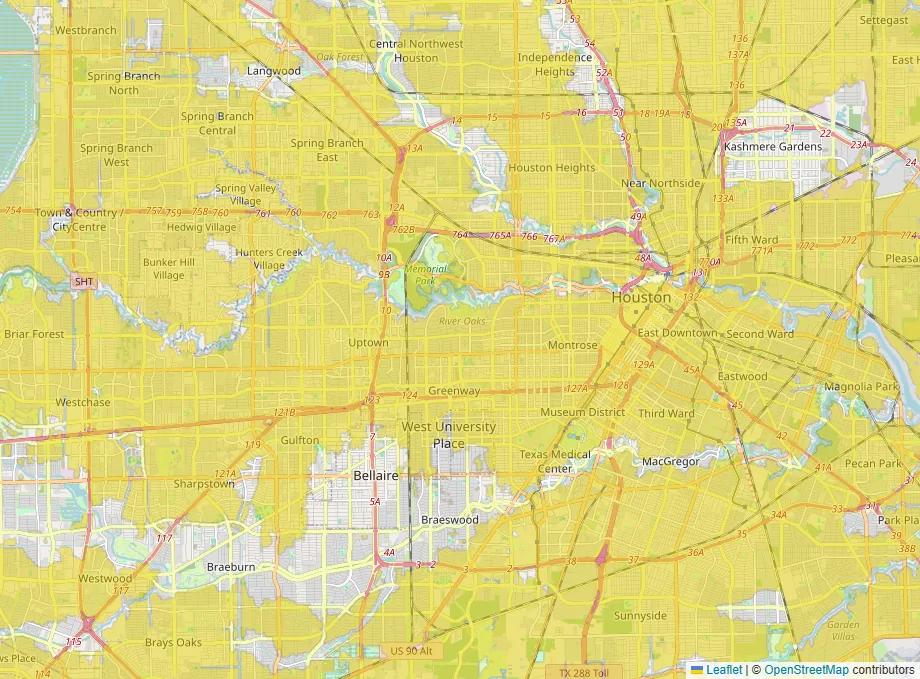
This map opens with flood, crime and noise switched on together. It’s a quick first pass on any area before you spend a weekend there.