Where to live if you fly every week
Last checked
If you fly every week or two, living near a big airport sounds like the obvious move. It is, up to a point. Past that point you’re trading a few minutes on travel days for noise every day. The right distance is usually close enough for an easy drive, and not under the flight path.
Which airport, not just how close
The size of the airport matters more than the distance to it. The FAA sorts commercial airports by their share of the country’s passengers. Its count for 2025 lists 30 large hubs, each handling at least 1% of all U.S. boardings, and 35 medium hubs. Large hubs tend to have the most nonstop routes, so you change planes less often.
For trips abroad, look for an airport where you can clear customs on arrival. Federal rules list the airports with customs and border processing. The international airports layer shows everywhere within a chosen distance of one, starting at 30 miles.
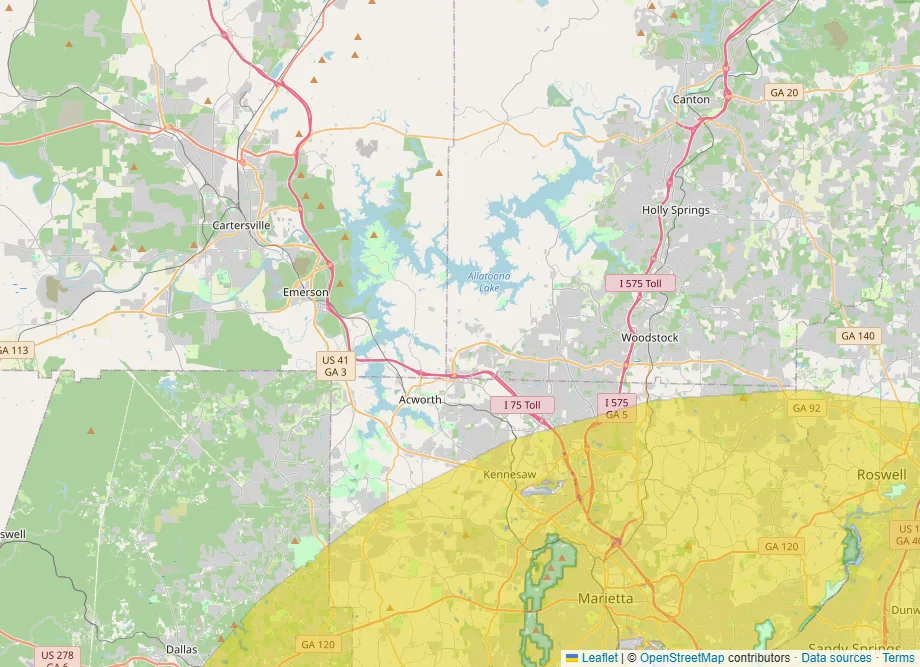
The domestic airports layer does the same for airports with regular passenger service. That runs from the biggest hubs down to small ones with at least 10,000 boardings a year.
The case for close
Airlines suggest arriving two hours before a domestic flight and three before an international one. Add the drive and parking, and a long trip to the airport can eat most of a morning. Over dozens of trips a year, an extra 45 minutes each way adds up to days.
Security programs shrink the airport part. TSA PreCheck costs $85 or less for five years, and TSA says about 99% of PreCheck travelers wait less than 10 minutes. Global Entry costs $120 for five years and includes PreCheck. Both make a slightly longer drive easier to live with.
The case against too close
Planes are loud well beyond the end of the runway. The FAA’s own 2021 survey found more people bothered by them than its standard predicted. Flight paths matter more than distance.
The noise layer includes aircraft noise along with roads and rail. Our guide to finding a quiet neighborhood covers how to check flight paths and listen for yourself.
So where should you look?
A practical target is a 20 to 40 minute drive from a large or medium hub, off the main approach and departure paths. Check the drive at the hour you’d actually leave for an early flight, not midday.
Your starting map
Start with international airport access and low noise together, then narrow the airport distance to what you’d drive.