Moving to a college town
Last checked
Living in a college town works best if you plan around the school year. Rents, traffic and parking follow the academic calendar. The jobs held up in one recession and not the next. Check how far you are from campus and when leases turn over.
What counts as a college town?
The geographer Blake Gumprecht wrote a book-length study of college towns. He describes one as a place where the college and its culture shape the town’s character. That’s different from a big city that happens to have a university. The U.S. has about 3,800 degree-granting colleges, so most regions have at least one.
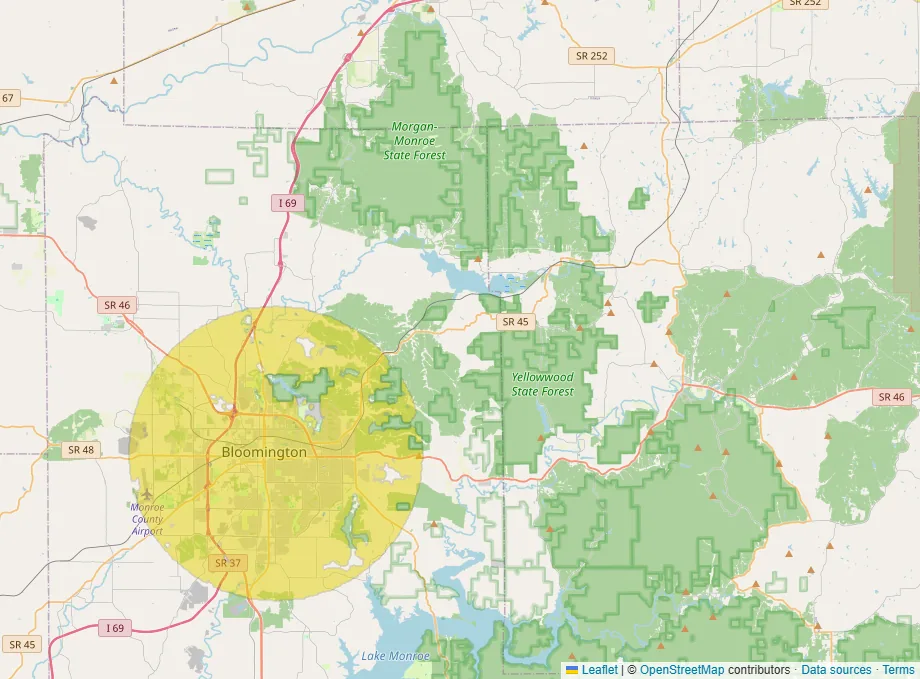
The college layer shows everywhere within 7 miles of a college. It counts public and private four-year schools and community colleges, and you can switch each type off.
Time your search to the lease cycle
Student leases typically start around August, and many students start looking for next year’s place in November. If you’re renting, the widest choice near campus tends to be in the late fall and winter. By summer the good ones near campus are often taken.
If you’d rather stay off the student lease cycle, look a little farther out, or in neighborhoods with mostly single-family homes and longer leases. The rent layer helps you compare what the same budget gets you near campus and farther away.
What the campus offers people who aren’t enrolled
Plenty. Many universities open their libraries, lectures, performances and games to the public. Some public universities sell community library cards. Stony Brook University, for example, charged New York residents $60 a year as of 2025.
Are college town economies stable?
It depends on the recession. The Federal Reserve Bank of Richmond looked at counties with a state flagship university in 2024. After the Great Recession, their unemployment rates were about half a point lower than other counties. During the first months of COVID, when campuses closed, they were higher. Its conclusion: a university doesn’t make a town immune to a recession.
Getting around
Ask whether the campus buses are open to the public. In some towns they are, and they add routes a town that size wouldn’t otherwise have. The transit layer shows where a stop is within a short walk.
Your starting map
This map opens with colleges, rents and transit together. Set the rent range to your budget.