Researching an area for a rental property
Last checked
In the third quarter of 2026, 7.6% of U.S. rental homes stood empty, up from 7.1% a year earlier. A rental is a bet on one local market for years. The rents nearby, the taxes, the local rules and how fast you can fill a vacancy matter as much as the house. Here are the questions to answer before you make an offer.
What do similar homes rent for?
Start with real rents, not the seller’s estimate. The rent layer shows typical rents for a chosen size and budget, using advertised rents with Census figures as a fallback.
Investors often use the “1% rule” as a first screen: monthly rent of at least 1% of the purchase price. It’s a rule of thumb, not a standard. Investors also use the cap rate: a year’s rent minus operating costs, divided by the price.
How easy will it be to keep it rented?
Local vacancy rates vary a lot from the national figure. Ask local property managers how long units sit empty between tenants.
What will the taxes and insurance cost?
More than for a home you live in, often. Many states give owner-occupied homes a tax break that rentals don’t get. Florida, for example, caps yearly increases in the taxable value of a primary home at 3%, but at 10% for other property. The property tax layer estimates effective rates for small areas, roughly neighborhood-sized.
A landlord policy replaces homeowners insurance, and the insurance industry’s research group says it typically costs about 25% more.
What rules limit what you can do?
Check before you buy:
- Rent limits. Oregon and California cap yearly rent increases statewide for older buildings. Oregon’s cap is 10% for 2027. Some cities have their own rules.
- Short-term rentals. Many cities restrict them. In New York City, renting a whole unit for less than 30 days is illegal unless the host lives there.
- Landlord-tenant law. Deposits, notice periods and evictions follow state law, and states differ a lot.
- Fair housing. Federal fair housing law covers most rentals, including advertising. HUD’s guidance explains what it requires of landlords.
Your starting map
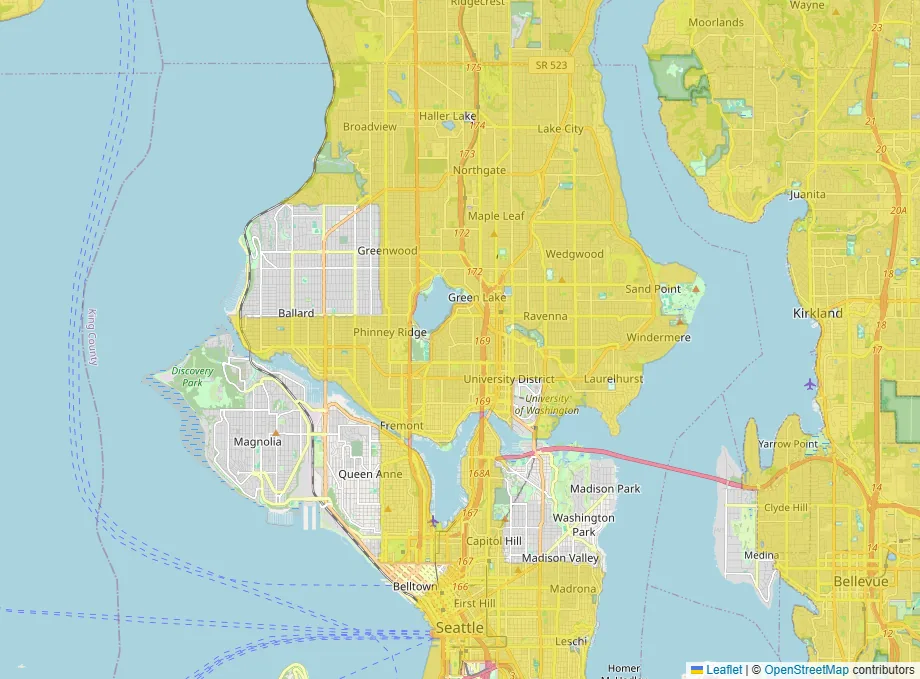
This map opens with rents, property tax and transit together. Set the rent range to what the house needs to earn.