Checking electricity costs before you move
Last checked
Two houses ten miles apart can pay very different prices for power. One can pay nearly twice what the other does. The listing won’t tell you, because the price depends on which utility serves the address. That’s worth knowing before you buy, since you can change the house but not the utility.
How much prices differ
The average U.S. home paid about 18 cents per kilowatt-hour in August 2026, up from about 17.6 cents a year earlier. State averages so far in 2026 run from about 12.5 cents in North Dakota to over 46 in Hawaii. California is above 32.
The federal Energy Information Administration lists the main reasons. They are the cost of fuel, the power plants, the lines that carry power, the weather, and how each state regulates prices.
Your utility matters more than your state
Within one state, prices can differ a lot. Cities and towns with their own public utilities, and rural electric co-ops, often charge less per kilowatt-hour than the big investor-owned companies. In 2024, homes served by public power paid 14.3 cents on average, co-op customers 13.5, and investor-owned utility customers 16.8. That’s the public power trade group’s reading of federal data, and small utilities report less detail, so the comparison is rough. The utility’s name is on the seller’s bill, and the city or county usually lists who serves each area.
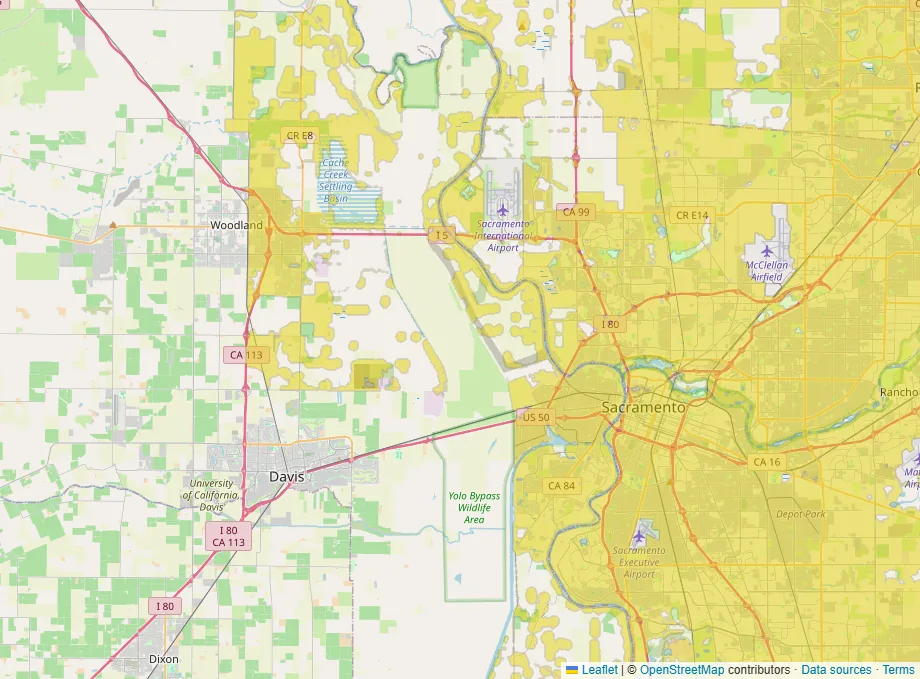
The electricity rate layer shows the price by ZIP code, using the cheapest utility that serves each one. It starts at 26 cents per kilowatt-hour or less.
Price isn’t the whole bill
How much you use matters as much as the price. A third of U.S. homes heat mainly with electricity, and air conditioning drives summer bills in hot places. Ask the seller for a year of bills, and ask the utility for the home’s average.
The utility costs layer compares what utilities cost overall, county by county, against the national average.
Things that change the math
- Time-of-use rates. Many utilities charge more in the late afternoon and evening. Some make it the default.
- Solar. Rules for selling power back to the grid vary by utility. California cut what new rooftop systems are paid for exported power in 2023.
- Heat pumps. About one in seven homes heats with one. The federal tax credit for installing one ended for equipment put in after 2025, so don’t count on it.
Your starting map
Open electricity rates and utility costs together, then lower the rate limit to see where power is cheapest.